 +1 (417) 221-3749
 Live Chat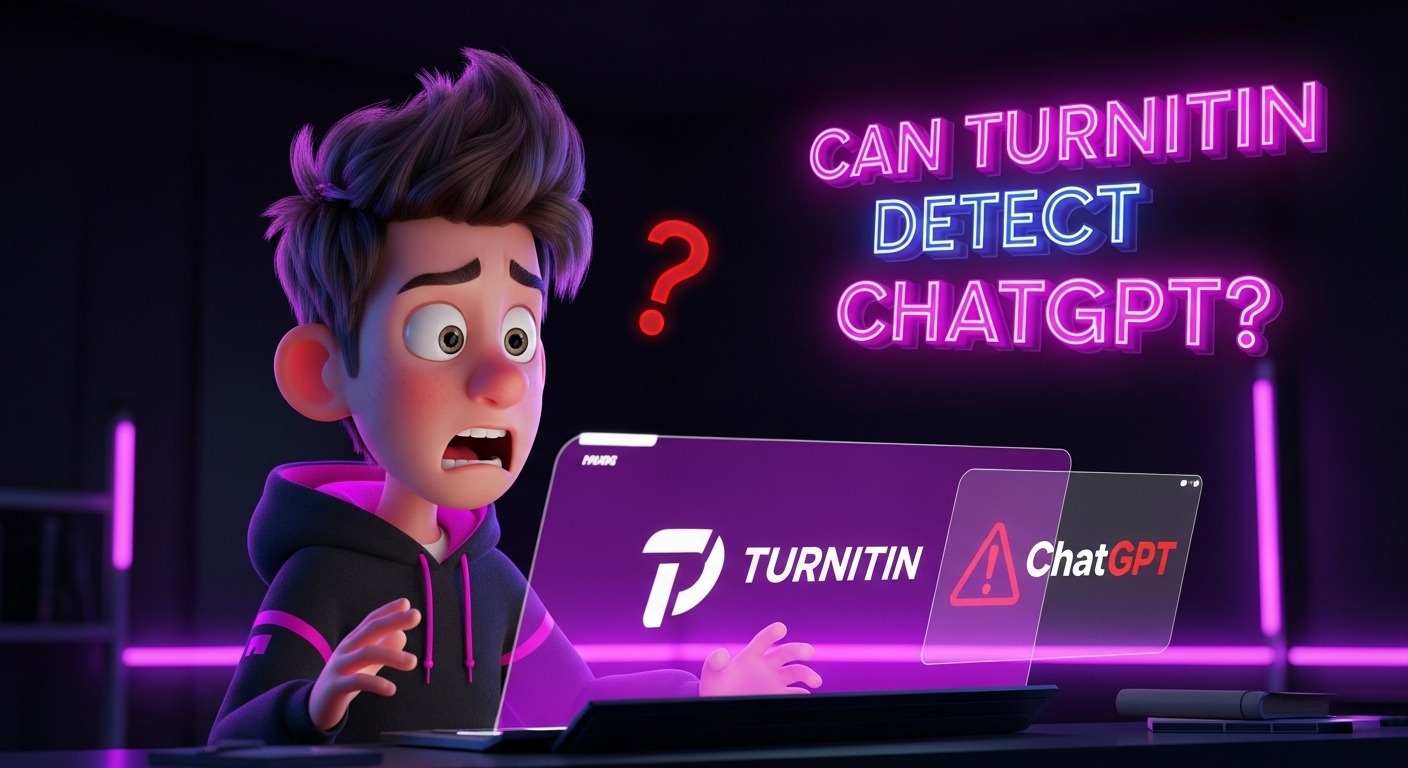
Can Turnitin Actually Detect AI-Generated Writing?
Universities across the United States now rely on digital assessment tools to maintain academic integrity. One of the most widely used systems is Turnitin, a platform originally designed to detect copied text in student submissions.
With the rise of generative AI tools like ChatGPT, many instructors and students now ask a new question: Can Turnitin actually detect AI-generated writing?
The answer is more complex than a simple yes or no. Turnitin has introduced AI-writing detection capabilities, but these tools do not work the same way as traditional plagiarism checks. Detection depends on patterns, probability models, and writing style analysis rather than exact matches in databases.
Understanding how this technology works helps clarify what instructors see when they review submissions. It also explains why some papers trigger flags even when written by humans, while other AI-generated texts remain undetected.
This guide breaks down how Turnitin's detection model functions, what accuracy studies reveal, and how educators evaluate submissions beyond automated scores. The goal is to clarify how AI detection actually operates in modern academic environments.
What Turnitin's AI Detection Actually Does
How the Detection Model Was Trained
Turnitin's AI detection system analyzes writing patterns instead of searching for copied text. Traditional plagiarism detection compares a submission against large databases of academic papers, websites, and publications. AI detection uses a different method.
The system relies on machine-learning models trained on two large groups of text:
- Human-written academic documents
- AI-generated writing produced by language models
During training, the model learns statistical differences between these two types of writing. It examines sentence length distribution, predictability of word choices, and structural patterns.
Large language models such as GPT-4 generate text by predicting the most likely next word. This process often produces highly consistent sentence patterns. Turnitin's detection model searches for these predictable sequences.
Instead of labeling text as definitively AI or human, the system estimates the percentage of writing that appears AI-generated based on statistical probability.
What Turnitin Flags — and What It Doesn't
Turnitin does not automatically accuse a submission of misconduct. Its AI detection tool simply highlights passages that resemble AI-generated patterns.
Instructors typically see:
- An AI writing indicator score
- Highlighted sentences that match AI-like patterns
- A percentage estimate for possible AI involvement
Important limitations exist. Turnitin does not claim to identify the exact tool used to create the text. It cannot determine whether content came from ChatGPT, another language model, or automated paraphrasing software.
The system also avoids scanning very short submissions. Essays below a certain word count rarely produce reliable detection signals.
Because of these limitations, institutions often treat the AI score as supporting evidence rather than proof.
The Difference Between Plagiarism Detection and AI Detection
Many students assume Turnitin's AI detection works like plagiarism scanning, but the two processes differ significantly.
Plagiarism detection checks for matching text across existing sources. If a student copies material from a website or academic paper, Turnitin identifies identical phrases.
AI detection does not rely on exact matches. Instead, it evaluates the style and predictability of writing.
For example:
- Plagiarism detection: compares text against databases.
- AI detection: evaluates statistical writing patterns.
A document can show 0% plagiarism yet still receive a high AI probability score. Conversely, a human-written essay may trigger AI indicators due to writing style similarities.
How Accurate Is Turnitin's AI Detection in Practice?
False Positives: When Human Writing Gets Flagged
A false positive occurs when human writing receives an AI detection score.
This situation can happen when a paper contains:
- Highly structured academic language
- Short sentences with predictable grammar
- Consistent vocabulary across paragraphs
Students who write clearly and concisely sometimes produce patterns that resemble AI-generated text. Technical subjects such as engineering, computer science, and statistics often use repetitive phrasing that can influence detection scores.
Because of this risk, many universities instruct faculty not to rely solely on the automated indicator.
Instead, instructors review drafts, writing history, and class participation before concluding.
False Negatives: When AI Writing Slips Through
False negatives occur when AI-generated content appears human to the detection system.
Several factors contribute to this outcome:
- AI models improve rapidly with each new version
- Prompt engineering can produce more varied output
- Editing and rewriting can change surface patterns
For example, if a student heavily revises AI-generated content or adds personal commentary, detection becomes significantly harder.
As generative AI systems evolve, detection tools must constantly update their training data to keep pace.
What Turnitin's Own Documentation Says About Accuracy
Turnitin has publicly acknowledged that AI detection tools remain imperfect.
The company states that its model aims to minimize false accusations, even if that means missing some AI-generated text. This design choice reflects the seriousness of academic misconduct claims.
Most universities treat the AI indicator as one signal among many. Faculty members often combine detection results with contextual review of the student's writing style and course performance.
Why AI Writing Gets Detected in the First Place
Sentence Structure Patterns That AI Repeats
Large language models generate text using probability predictions. This process often produces sentence structures that follow consistent rhythms.
For example, AI text frequently alternates between:
- short declarative sentences
- predictable transitions
- evenly balanced paragraphs
Human writing tends to vary more in structure. People shift tone, break grammatical expectations, and adjust phrasing depending on the argument they develop.
Detection systems identify these statistical differences across large sections of text.
Vocabulary and Tonal Uniformity in Generated Text
AI writing often maintains a stable tone throughout an entire document.
Human authors typically change vocabulary depending on:
- emotional emphasis
- personal perspective
- argument development
Language models, by contrast, aim for consistency. While this improves clarity, it also creates patterns that machine-learning detectors can identify.
Even subtle variations in word distribution may reveal whether the text originated from algorithmic prediction.
Lack of Personal Voice and Experiential Reasoning
Academic essays often contain small signals of human reasoning.
These signals may include:
- personal reflections on research findings
- hesitation in argument development
- nuanced interpretation of sources
AI systems generate information by synthesizing patterns in training data. They do not possess lived experience or real research activity.
Detection models sometimes flag writing that lacks these subtle human markers.
How Students Are Trying to Bypass AI Detection
Paraphrasing Tools and Why They Often Fail
Some students attempt to avoid detection by running AI text through paraphrasing software.
Tools such as QuillBot modify wording while preserving meaning. However, paraphrasing rarely changes the deeper statistical patterns that detection systems analyze.
As a result, heavily paraphrased AI content can still produce high probability scores.
Manual Rewriting vs. Prompt Engineering
Other strategies involve rewriting AI output manually or experimenting with prompts.
Prompt engineering may instruct the AI to:
- vary sentence length
- adopt a conversational tone
- include rhetorical questions
These adjustments can make the text appear more human. However, the effectiveness varies widely depending on the editing process.
Detection models examine long segments of writing, so minor surface changes do not always reduce AI probability scores.
Mixing Human and AI-Written Sections
Another approach involves combining AI-generated paragraphs with human writing.
While this strategy can lower detection percentages, it often introduces stylistic inconsistencies.
Instructors sometimes notice abrupt shifts in:
- vocabulary level
- argument depth
- citation usage
These differences may prompt closer review even if the AI score remains moderate.
Academic Integrity and What is Actually at Stake
How Universities Are Updating Their AI Policies
Many universities in the United States now publish official policies regarding generative AI.
Institutions such as Harvard University and Stanford University allow limited AI use for brainstorming or outlining. However, submitting AI-generated work as original writing often violates academic integrity rules.
Policies vary across departments and instructors. Some courses encourage responsible AI use when students clearly disclose how they used the tool.
What Happens When a Submission Triggers a Flag
When Turnitin flags possible AI involvement, the instructor typically reviews the paper manually.
The review process may include:
- comparing the submission with earlier drafts
- evaluating consistency with in-class writing
- discussing the work with the student
Automated detection rarely leads to immediate disciplinary action. Instead, faculty members examine the context surrounding the assignment.
Students managing tight timelines often turn to structured support, some explore options like a custom essay writing service to ensure their work reflects genuine academic effort.
Services such as Apex Essays focus on original research and structured writing rather than automated generation.
The Difference Between Using AI and Submitting AI Work as Your Own
Universities increasingly distinguish between AI assistance and AI substitution.
Acceptable uses often include:
- brainstorming topic ideas
- summarizing research materials
- checking grammar or readability
Problems arise when students submit AI-generated essays without meaningful personal contribution.
Academic integrity policies emphasize that assignments must represent the student's own reasoning and research process.
What Makes Writing Sound Human to Both Readers and Detectors
First-Person Perspective and Lived Experience
Human writing often includes reflections that connect ideas to personal understanding.
For example, students may explain:
- How research influenced their perspective
- Why certain evidence appears more convincing
- how their interpretation evolved during writing
AI systems rarely produce authentic experiential reasoning because they lack real academic experiences.
Argument Inconsistency as a Marker of Human Thought
Human reasoning often changes during the writing process.
Writers reconsider ideas, refine arguments, and adjust conclusions. These shifts create subtle inconsistencies in tone and structure.
AI models usually maintain consistent logic throughout a document. Detection systems sometimes identify this uniformity as a potential AI indicator.
Discipline-Specific Language and Source Integration
Academic writing requires precise integration of research sources.
Students must evaluate studies, interpret evidence, and connect citations to their own analysis. This process requires judgment that automated systems struggle to replicate.
Academic assignments like research papers demand both citation accuracy and original analysis, something Apex Essays addresses directly when students ask us to write their research paper.
The goal remains authentic academic work supported by credible sources.
Reducing AI Similarity Scores Without Compromising Quality
Rewriting at the Idea Level, Not the Word Level
Many students attempt to reduce AI scores by replacing individual words.
This approach rarely works because detection systems analyze larger patterns.
Effective rewriting focuses on:
- reorganizing arguments
- restructuring paragraphs
- presenting ideas from a different perspective
Changing the conceptual structure of the text produces more meaningful variation.
Adding Original Analysis and Critical Commentary
Original insight remains one of the strongest indicators of human authorship.
When students analyze sources critically, they introduce reasoning that automated tools rarely replicate.
This may include:
- evaluating research limitations
- comparing competing studies
- proposing alternative interpretations
These elements demonstrate engagement with the topic rather than simple text generation.
Proper Citation and Source Attribution as a Signal of Authenticity
Academic writing requires careful citation of research materials.
When students integrate sources correctly, they show familiarity with scholarly conversations surrounding the topic.
Understanding how to handle sources correctly is also covered in our guide on reducing plagiarism in research papers.
Resources like this help students maintain originality while meeting citation standards.
What Educators Actually Look for Beyond Detection Scores
Consistency Between Draft and Final Submission
Many instructors review earlier drafts before evaluating the final version.
If the writing style changes drastically between drafts, instructors may ask for clarification.
This comparison helps educators determine whether the final submission reflects the student's normal writing ability.
In-Class Performance vs. Submitted Work
Faculty members often compare assignments with in-class writing exercises.
If a student writes clearly during exams or discussions but submits a paper with a drastically different style, the discrepancy raises questions.
Conversely, consistent writing quality across assignments supports authenticity.
The Contextual Review Process After a Flag
When Turnitin highlights potential AI involvement, instructors usually conduct a contextual review.
This review considers several factors:
- assignment difficulty
- writing history
- citation patterns
- classroom participation
Automated scores provide a starting point, but human judgment ultimately determines academic integrity outcomes.
Where AI Writing Tools Genuinely Fit in Academic Work
Research Assistance vs. Content Generation
AI tools can assist with certain stages of the research process.
Students sometimes use systems like ChatGPT to:
- summarize background information
- generate topic ideas
- explain unfamiliar concepts
These uses resemble digital study aids rather than full writing replacements.
Using AI to Outline, Then Writing Independently
Some instructors encourage students to use AI tools for brainstorming outlines.
Once the outline exists, students develop the arguments themselves using credible sources.
This method allows technology to assist with organization while preserving independent writing.
When Instructors Allow AI Use — and How to Disclose It
Course policies increasingly require transparency regarding AI assistance.
Some instructors ask students to include a short note explaining:
- which tools they used
- How the tool supported their work
- which sections they wrote independently
Clear disclosure helps maintain academic honesty while acknowledging the evolving role of technology in education.
Conclusion
Turnitin can identify writing patterns associated with AI-generated text, but detection remains probabilistic rather than definitive. Educators rely on broader evaluation methods that consider writing style, course participation, and research engagement.
As AI technology continues to evolve, universities will likely refine policies and detection systems. Understanding how these tools work helps students approach academic writing responsibly while maintaining originality.
For students seeking structured academic guidance, Apex Essays focuses on research-driven writing that aligns with university standards and authentic scholarship.