 +1 (417) 221-3749
 Live Chat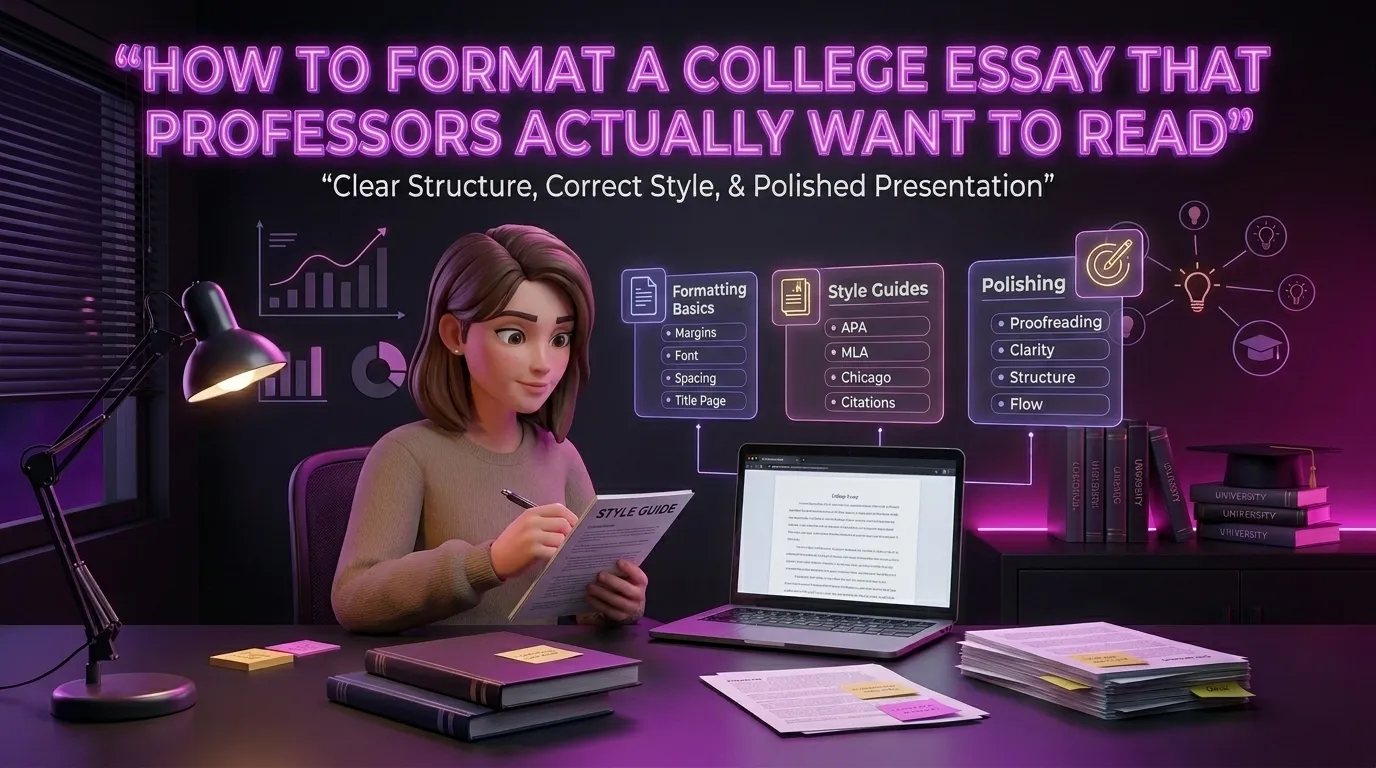
A college essay does not need fancy design to make a strong first impression. It needs a clean page, clear structure, steady spacing, and a layout that helps your professor follow the argument without extra effort.
Many students spend hours writing strong ideas, then lose marks because the page looks rushed. The title sits in the wrong place. The heading misses key details. The citations do not match the required style. The essay has strong points, but the format makes it harder to read.
That is why learning how to format a college essay matters. Format does not replace good writing, but it helps good writing stand out. A clear format shows care, focus, and respect for academic rules.
Apex Essays works with students who often know what they want to say but feel unsure about the presentation. This article explains college essay format in a simple way, so each page looks clean, easy to read, and ready for class or admission review.
What College Essay Format Really Means
College essay format means the way your essay looks and works on the page. It includes margins, spacing, font, title, heading, page numbers, citation style, paragraph layout, and submission settings.
It also includes structure. A college essay needs an introduction, body paragraphs, and a conclusion. Each part has a role. The introduction gives direction. The body develops the argument. The conclusion closes the point without adding a new one.
Professors do not format essays for students after submission. They read what appears on the page. A clean layout makes that job easier. A messy layout can distract them before they reach your main idea.
A proper college essay format should answer three basic questions:
Who wrote the essay?
What class or assignment does it belong to?
Can the reader follow the argument with ease?
When the answer is clear, the paper feels more professional before the first full paragraph begins.
Format Is More Than Margins and Font Size
Margins and font size matter, but they only form the surface. Real formatting supports reading.
A clean essay layout helps each idea sit in the right place. It gives the thesis room to stand out. It makes each body paragraph easy to scan. It also helps citations connect with the evidence they support.
A college paper can follow every margin rule and still feel hard to read. Long blocks of text, weak paragraph breaks, and unclear headings can make the essay feel rushed.
Good academic formatting gives the essay a quiet structure. It does not call attention to itself. It lets the reader focus on the argument.
How Format Helps Professors Read Your Work Faster
Professors read many essays in a short time. They look for clear signs of order. A clean heading, steady spacing, and clear paragraph breaks help them move through the essay without pause.
Format also shows that the student followed directions. In college, this matters. If the assignment asks for MLA format and the essay uses APA without reason, the professor may see that as a missed instruction.
The same idea applies to word count, file type, citation style, and page setup. Each part sends a small signal about care and discipline.
Apex Essays often reminds students that format works like a frame. It does not create the argument, but it shapes how the argument appears.
Academic Essay Format vs Application Essay Format
A classroom essay and a college application essay do not follow the same format.
An academic essay usually needs a heading, title, thesis statement, body paragraphs, citations, and a reference section if sources appear. The professor may ask for MLA, APA, Chicago, or another style.
A college application essay often focuses more on story, voice, and word count. It may not need a title page, formal citations, or a standard academic heading. The Common App, for example, places more weight on the text box, word limit, and clear paragraph flow.
So, before you format any essay, check the type of essay first. A college admissions essay should not look like a research paper unless the instructions ask for that style.
Basic College Essay Formatting Rules Students Should Follow
Most college essays use a simple academic setup. Some professors change the rules, but many papers follow these basic settings.
Use:
One-inch margins
Double spacing
A readable 12-point font
Standard page numbers
Left-aligned text
A clear title
Consistent paragraph indents
The required citation style
These rules create a clean page. They also help your professor read and mark the essay with less effort.
Use One-Inch Margins, Double Spacing, and a Clear Font
One-inch margins give the page enough white space. They also leave room for comments if your professor marks the document by hand or through a digital tool.
Double spacing makes the essay easier to read. It also helps the reader separate one line from the next. Single spacing can make a college essay look dense, even when the writing itself is clear.
Use a simple font. Times New Roman, Arial, Calibri, or a similar readable font usually works. Many professors ask for 12-point Times New Roman because it has long use in academic writing.
Do not use decorative fonts. They may look creative, but they reduce clarity. A professor wants to read your ideas, not decode your design choices.
Set Page Numbers the Way Your Assignment Requires
Page numbers help the professor refer to exact parts of the essay. They also keep longer papers in order.
In MLA format, students often place the last name and page number in the upper right corner. In APA format, the page number usually appears in the header on the right side.
Always check the assignment instructions. Some professors want page numbers on every page. Others may not require them for short essays.
A page number may seem like a small detail, but missing it can make the paper look unfinished.
Keep the Layout Clean Before Adding Style Choices
A college essay should not look like a poster, slide, or social media post. Avoid colored text, large title fonts, decorative borders, and extra spacing between paragraphs.
Academic writing values clarity. A plain layout often works better than a styled one.
Keep the same font from the first page to the last. Use the same spacing throughout the paper. Align the title in the way your format style requires. Do not center body paragraphs unless the assignment has a rare reason for it.
A clean essay format tells the reader that the writing matters more than decoration.
How to Format the Heading, Header, and Title of a College Essay
Many students mix up heading, header, and title. These three parts do different jobs.
A heading gives assignment details. A header usually appears at the top of the page and may include a page number. A title names the essay.
Knowing the difference helps you format the first page with more confidence.
What Goes in a College Essay Heading
In many MLA-style college essays, the heading appears on the first page, aligned left. It often includes:
Student name
Professor name
Course name
Date
Each item usually appears on its own line. After the heading, the title appears on the next line, often centered.
This setup gives the professor the key details right away. It also keeps the first page neat.
For example:
Student Name
Professor Name
English 101
15 October 2026
Title of the Essay
This format may change based on the style guide or professor instructions. Some courses use APA title pages instead of a simple heading.
How a Header Differs From a Heading
A header sits in the top margin area of the page. It repeats across pages in some formats.
In MLA format, the header often includes the student’s last name and page number. In APA format, the page number appears in the header, and some papers may include a short title depending on the version and assignment level.
The heading appears in the main body area of the first page. The header appears above the body area.
This difference matters because placing all details in the header can make the first page look wrong. Placing page numbers inside the heading can also cause confusion.
How to Title a College Essay Without Making It Sound Forced
A college essay title should be clear and relevant. It should connect with the essay’s main idea.
Avoid titles that sound too broad. “Education” says very little. “The Role of Digital Tools in First-Year Writing” gives a clearer signal.
A title does not need a full sentence. It also does not need a joke or a dramatic phrase. In academic writing, clarity wins.
Capitalize the title according to the required style. MLA and APA have rules for title case, but professors may accept simple title formatting as long as it looks consistent.
Apex Essays often encourages students to write the title after the draft. Once the main argument becomes clear, the title becomes easier to shape.
When a Title Page Makes Sense
A title page does not belong in every college essay.
APA papers often use a title page. Some research papers also require one. A professor may ask for it in the assignment instructions.
MLA essays often do not need a title page unless the professor asks for one. Instead, MLA usually uses a first-page heading and centered title.
A title page may include the essay title, student name, school name, course, professor, and date. The exact layout depends on the required format.
Do not add a title page just to make the essay look longer. Professors notice that quickly.
How to Structure the Main Parts of a College Essay
Formatting does not stop at the top of the page. The inner structure matters too.
A strong college essay usually follows a clear path:
Introduction
Thesis statement
Body paragraphs
Evidence and analysis
Conclusion
This structure helps the reader understand what the essay argues and how each part supports that argument.
Students who need help shaping this flow often use college essay writing support when they want clearer thesis placement, stronger paragraph order, or a cleaner academic draft.
Start With an Introduction That Gives the Reader a Clear Direction
The introduction should bring the reader into the topic. It should not wander.
Start with context that connects to the essay question. Then narrow the focus. End the introduction with a thesis statement that gives the main claim.
A thesis statement should not sound vague. It should make a point that the body paragraphs can prove.
Weak thesis: Social media affects students.
Clear thesis: Social media affects first-year college students by shaping study habits, peer pressure, and attention span.
The second version gives the essay a path. The reader knows what to expect.
Build Body Paragraphs Around One Main Point Each
Each body paragraph should focus on one main idea. That idea should connect to the thesis.
A strong body paragraph often includes:
Topic sentence
Evidence
Explanation
Link back to the main argument
The topic sentence tells the reader what the paragraph will prove. Evidence supports the point. Analysis explains why the evidence matters.
Do not place too many ideas in one paragraph. A crowded paragraph makes the argument harder to follow.
Use Evidence Before Analysis, Not After It
College essays need more than opinion. They need support.
Evidence may come from a source, text, study, class reading, or real example. After you present the evidence, explain it in your own words.
Do not drop a quote into the paragraph and move on. A quote cannot do the thinking for you.
For example, after citing a source, explain how it connects to the thesis. Show the professor that you understand the source and can use it with purpose.
This step separates summary from analysis. College writing needs analysis.
End With a Conclusion That Closes the Argument Clearly
The conclusion should not repeat the introduction word for word. It should bring the essay to a clear close.
Restate the main idea in fresh language. Sum up the main points. Then leave the reader with a final thought that fits the topic.
Do not add a new source or new argument in the conclusion. That can make the essay feel unfinished.
A good conclusion gives closure. It shows that the essay reached its goal.
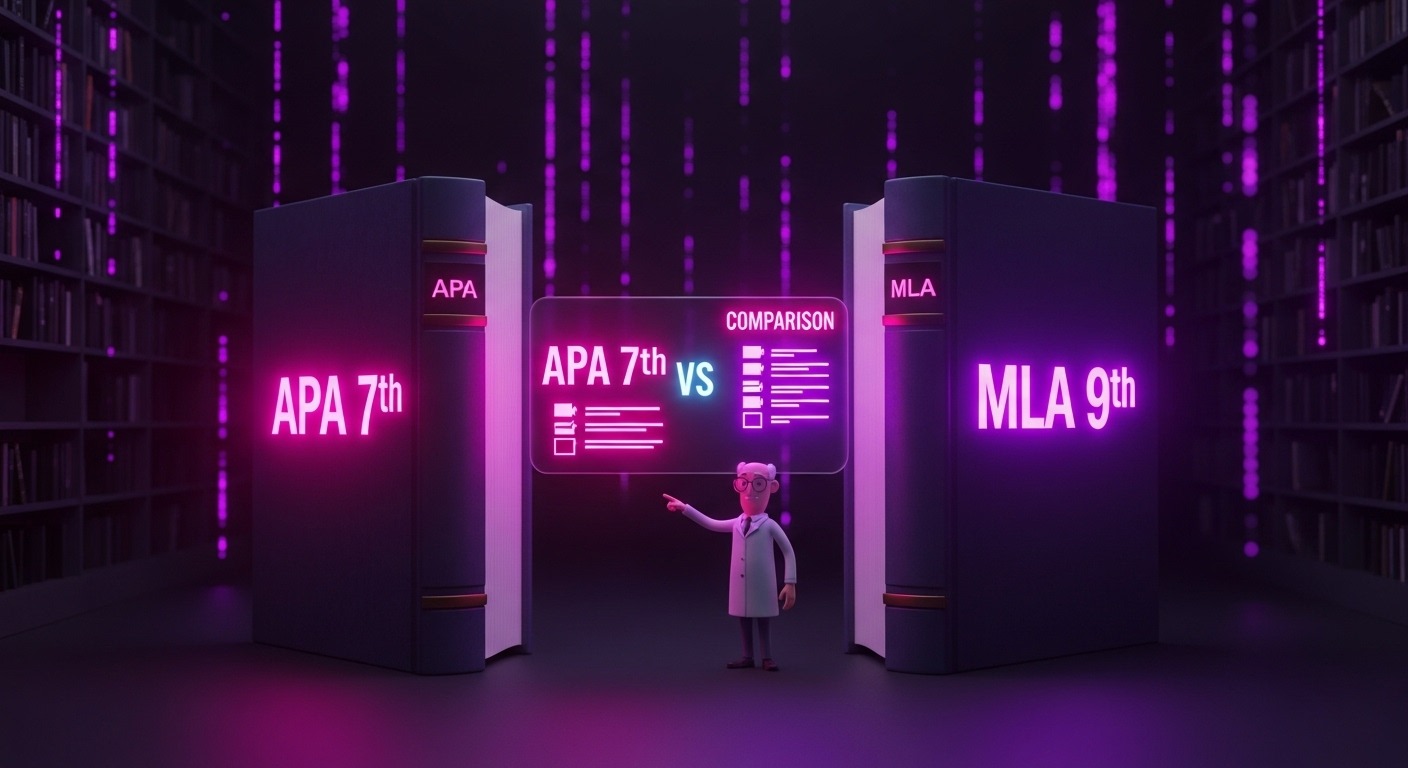
MLA, APA, and Chicago Formatting in College Essays
College essays often use citation styles. These styles tell students how to format sources, page setup, headings, and reference lists.
The three common styles are MLA, APA, and Chicago. Each one serves a different academic purpose.
When Professors Expect MLA Format
MLA format often appears in English, literature, humanities, and language courses.
A basic MLA essay often includes:
One-inch margins
Double spacing
12-point readable font
Left-aligned first-page heading
Centered title
Last name and page number in the header
In-text citations with author and page number
Works Cited page
MLA focuses on authorship and page-based citation. This helps readers find exact passages in books, essays, and articles.
When writing a college essay in MLA format, keep the page simple. MLA does not require a title page unless the professor asks for one.
When APA Format Fits the Assignment
APA format often appears in psychology, education, nursing, social science, and related fields.
A basic APA student paper often includes:
Title page
Page numbers
Clear title
Double spacing
References page
In-text citations with author and year
APA focuses on dates because many fields that use it care about how current the source is.
Students who need help with title pages, citations, or reference lists can use APA paper formatting help from Apex Essays when their course requires careful APA setup.
How Chicago Style Changes the Page Setup
Chicago style often appears in history, theology, and some humanities courses. It may use footnotes or endnotes instead of parenthetical citations.
A Chicago-style essay may include:
Footnotes
Bibliography
Page numbers
Formal title
Double spacing in the main text
Chicago can feel different because notes appear at the bottom of the page. This format lets students give source details without crowding the main paragraph.
Use Chicago only when the assignment asks for it. Do not switch citation styles because one feels easier.
How to Check Which Style Your Professor Wants
The assignment instructions should decide the style. Check the prompt before you start writing.
Look for words such as MLA, APA, Chicago, Works Cited, References, title page, footnotes, word count, and file type.
Also check the course subject. English often uses MLA. Psychology often uses APA. History may use Chicago. Still, the professor’s instructions matter most.
When the instructions do not name a style, ask before submission. Guessing can lead to formatting errors that a simple question could prevent.
How to Format a College Application Essay
A college application essay has a different goal from a class essay. It does not try to prove an academic argument in the same way.
It shows voice, growth, judgment, and self-awareness. The format should make the story easy to read.
Admission readers may review many essays in one cycle. A clean layout helps them stay focused on the applicant’s message.
Application Essays Need a Different Kind of Structure
A college application essay usually does not need citations, a Works Cited page, or a formal academic heading.
It needs:
A clear opening
A focused story or theme
Strong paragraph flow
A natural voice
A clear close
Correct word count
The essay should not look like a five-paragraph class paper unless the prompt calls for that structure.
For students working on admission essays, college admission essay support from Apex Essays can help shape a clearer draft without making the essay sound stiff or generic.
How to Format a Common App Essay
The Common App essay has a word limit. Students often paste the essay into a text box, so formatting should stay simple.
Use short paragraphs. Keep spacing clean. Avoid bold text, unusual symbols, and complex formatting that may not transfer well.
Do not rely on indentation alone. Text boxes can change spacing. Clear paragraph breaks help preserve structure after pasting.
Before submission, preview the essay. Make sure paragraph breaks remain visible. Check that no odd characters appear.
A Common App essay should feel easy to read on screen.
How to Format a Personal Statement for College
A personal statement needs a clear shape. It should not read like a list of achievements.
Start with a moment, idea, or problem that reveals something meaningful. Then develop the story with reflection. End by showing growth, purpose, or direction.
The format should support the story. Short paragraphs can help the pace. Each paragraph should move the reader forward.
Students who need help with story flow, opening lines, or structure can use personal statement guidance when they want a clean draft that still sounds personal.
Apex Essays treats personal statements differently from class essays because admission writing needs voice as well as order.
How Scholarship Essay Formatting Usually Works
Scholarship essays often follow specific instructions. Some ask for a prompt response. Others ask for a personal statement, goal essay, or short academic plan.
Check:
Word count
Font size
File type
Naming rules
Required prompt
Page limit
Scholarship committees may reject essays that ignore basic instructions. A strong story cannot fix a missed word limit or wrong file format.
Keep the layout clean and direct. Use paragraphs that make the essay easy to scan.
How to Format a College Essay in Word or Google Docs
Most students write essays in Microsoft Word or Google Docs. Both tools can create a clean academic format when set up correctly.
The key is to adjust settings before drafting. This saves time later.
Set Margins, Spacing, and Font Before You Start Writing
Open the document settings first. Set margins to one inch unless the assignment says otherwise.
Then set the font and size. Choose a readable 12-point font. Set line spacing to double.
Check paragraph spacing too. Some tools add extra space after each paragraph. In many academic essays, you should remove extra spacing and use standard double spacing instead.
Set these details before writing the first line. It keeps the draft consistent.
Use Styles for Headings Only When the Assignment Allows Them
Some college papers use section headings, especially longer research papers. Short essays may not need them.
If the professor asks for headings, use them in a clean way. Keep wording clear. Do not make headings too long.
For a standard essay, the title may be the only heading after the student information. Adding many headings to a short essay can make it look like a report instead of an essay.
In APA papers, headings have levels. In MLA papers, headings may appear in longer work but do not always appear in short essays.
Save and Submit the File in the Right Format
Before submission, check the file type. Many professors ask for DOCX or PDF.
DOCX allows comments and edits. PDF keeps the layout fixed. Some learning systems accept both, but not always.
Name the file clearly. A good file name may include your last name, course, and assignment name.
Example:
Garcia_English101_Essay2.docx
Do not submit a file named “finalfinalnewessayreal.docx.” It may look careless and create confusion.
College Essay Format Example Students Can Follow
Examples help students see how formatting works on the page. The exact setup depends on the assignment, but the models below show common patterns.
Sample Academic Essay Layout
A basic academic essay may follow this order:
Student Name
Professor Name
Course Name
Date
Centered Essay Title
Introduction paragraph with context and thesis statement.
Body paragraph one with a topic sentence, evidence, and analysis.
Body paragraph two with a new main point, evidence, and analysis.
Body paragraph three with another main point, evidence, and analysis.
Conclusion paragraph that closes the argument.
Works Cited or References page if sources appear.
This format works well for many short college essays, especially when the professor asks for MLA-style presentation.
Sample Application Essay Layout
A college application essay may follow this shape:
Opening paragraph with a clear personal moment or idea.
Second paragraph that develops the situation or challenge.
Third paragraph that shows reflection, choice, or growth.
Fourth paragraph that connects the story to values, goals, or future direction.
Final paragraph that closes with insight rather than a summary.
This layout should feel natural. It should not force the story into a strict academic formula.
Apex Essays often sees stronger application essays when students focus on flow first, then clean the format after the story works.
Sample Heading and First Page Setup
For a common MLA-style essay, the first page may look like this:
Maria Johnson
Professor Ellis
English 102
3 November 2026
The Role of Memory in Modern Family Stories
The introduction begins here with a clear opening sentence. The first paragraph gives context, narrows the topic, and ends with a thesis statement.
This setup gives the professor all needed details without a title page.
For APA, the student may need a title page instead. In that case, the first content page starts after the title page.
Formatting Mistakes That Make College Essays Hard to Read
Small format errors can make a strong essay look weak. Some mistakes happen because students rush. Others happen because students copy a format from another class without checking the new instructions.
A clean final review can catch most of these issues.
Using the Same Layout for Every Essay Type
Do not format every essay the same way. A personal statement, MLA analysis essay, APA research paper, and scholarship essay each need different choices.
A classroom essay may need citations. An admission essay usually does not. An APA paper may need a title page. An MLA essay often does not.
Start with the assignment type. Then choose the format.
Adding a Title Page When the Essay Does Not Need One
A title page can look professional in the right setting. It can also look wrong when the style does not ask for it.
For MLA essays, a title page often adds no value unless the professor requests it. Use the first-page heading instead.
For APA essays, a title page usually matters. Follow the student paper format required by your course.
Do not add pages to make the essay seem longer. Professors care about the quality of the writing and the accuracy of the format.
Ignoring Word Count, File Type, or Citation Rules
Word count matters. A 700-word essay should not become 1,200 words unless the professor allows a range.
File type also matters. Some systems cannot open Pages files or uncommon formats. DOCX and PDF remain common choices.
Citation rules need care as well. If the essay uses sources, the in-text citations and source page must match the required style.
Apex Essays helps students notice these details because they often affect how polished the final draft feels.
Making the Page Look Busy Instead of Readable
Avoid heavy formatting. Do not use many font sizes, extra spaces, underlined titles, or bold body text.
A college essay should look calm. The reader should move from title to introduction to body paragraphs without visual noise.
Use plain formatting and strong writing. That mix works better than decoration.
College Essay Formatting Checklist Before Submission
Before turning in the essay, review the format in stages. Do not check everything at once. A step-by-step review helps catch more errors.
Use this process after the final draft, not while writing the first version.
Check Page Setup First
Review the page settings:
Margins
Font
Font size
Line spacing
Paragraph spacing
Page numbers
Make sure the whole essay uses the same settings. Sometimes copied text brings a different font or spacing into the document.
Select all text and apply the correct format again if needed.
Review the Heading, Title, and Citation Style
Check the first page. Make sure the heading includes the right details if the format calls for one.
Check the title. It should sit in the correct place and use the same font as the essay unless the style guide says otherwise.
Review citations. MLA, APA, and Chicago each use different rules. Do not mix them in one paper.
A Works Cited page should not appear in an APA paper. A References page should not appear in an MLA paper. Use the label that matches the style.
Read the Essay Once for Flow and Once for Format
Read the essay twice before submission.
The first read should focus on flow. Look at the thesis, paragraph order, evidence, and conclusion.
The second read should focus on format. Check spacing, citations, page numbers, title, heading, and file name.
Students who want a final review before turning in a paper can use editing and proofreading support to catch format issues, grammar errors, and unclear sentence flow.
This type of review helps the essay feel cleaner without changing the student’s main idea.
Match the Final Draft With the Professor’s Instructions
The final step is simple: compare the essay against the assignment instructions.
Check every requirement. Look at word count, source count, citation style, file type, and due date.
Do not assume the format from a past class still applies. Each professor may set different rules.
Apex Essays encourages students to save a final copy and a backup copy. That way, a last-minute file issue does not erase the work.
Final Thoughts on Formatting a College Essay
Learning how to format a college essay helps students present their ideas with care. A clear format does not make the argument stronger by itself, but it helps the reader see that argument without distraction.
Start with the assignment instructions. Set the margins, spacing, font, heading, title, and page numbers. Use the citation style your professor asks for. Build the essay with a clear introduction, focused body paragraphs, and a conclusion that closes the point.
For college application essays, focus on clean paragraph flow, word count, and readability. For academic essays, focus on structure, citations, page setup, and source presentation.
Apex Essays supports students who want their essays to look clear, sound natural, and meet academic expectations. When the format works, the writing gets a fair chance to do its job.