Live Chat
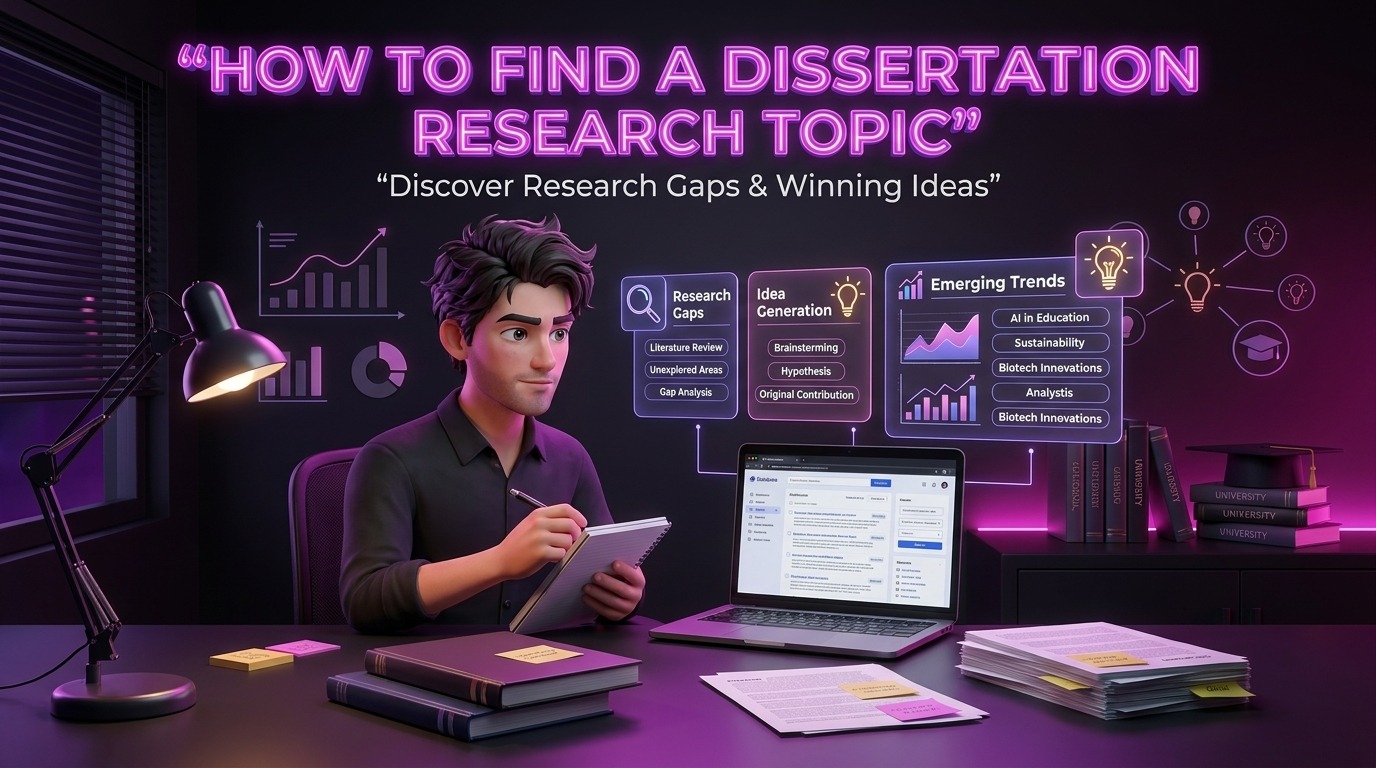
A dissertation topic shapes the whole research journey. It affects the literature review, research question, method, data collection, proposal, advisor feedback, and final writing plan. A strong topic gives the study direction. A weak topic creates confusion before the first chapter even starts. Apex Essays helps students think about dissertation topic selection as an academic decision, not a random idea hunt. The right topic should connect personal interest with scholarly value. It should also fit the degree level, university rules, available sources, and time limits.
Many students start with a broad subject such as education, law, nursing, business, psychology, or public health. That start makes sense. Yet a broad subject does not work as a dissertation topic until it becomes a focused research problem. A dissertation needs a clear purpose, a research gap, a question that can guide the study, and a method that can answer that question.
This blog explains how to find a dissertation research topic in a clear, practical way. It also shows how Apex Essays thinks through topic feasibility, academic sources, degree level, and advisor expectations before the proposal stage begins.
What Makes a Dissertation Topic Worth Researching
A dissertation topic becomes worth researching when it addresses a real academic problem. It should not only sound interesting. It should create space for critical analysis, evidence-based research, and original contributions. A useful topic has four core parts. It names the issue, shows why the issue matters, connects with scholarly sources, and allows a method that fits the study. When these parts work together, the topic can move into a research proposal with less confusion.
For example, “online learning” sounds broad. A stronger topic may focus on how first-generation college students in U.S. public universities experience online learning support after their first semester. This version has a setting, group, issue, and possible research direction. Apex Essays often guides students to test a topic with one simple question: Can this topic support a focused study from start to finish? If the answer feels unclear, the idea may need more reading, a narrower scope, or a stronger research gap.
A topic worth researching also fits the academic discipline. A nursing dissertation needs clinical or healthcare relevance. A law dissertation needs legal reasoning, policy analysis, case law, or statutory context. A business dissertation needs management, market, leadership, finance, or organizational value.
A good topic also leaves room for a clear thesis statement or central claim. Even when a dissertation uses research questions instead of a fixed argument, the topic must still guide the reader toward a focused academic purpose.
Quick Academic Answer for Topic Selection
The simplest way to find a dissertation research topic is to start with an academic interest, review recent peer-reviewed sources, identify a research gap, narrow the scope, check feasibility, and shape the idea into a research question.
A strong dissertation topic should answer these questions:
Does the topic solve a clear research problem?
Can scholarly sources support the study?
Can the student collect or analyze the needed data?
Does the topic fit the degree level?
Can an advisor review and approve the direction?
Apex Essays recommends treating topic selection as a step-by-step academic filter. Each step removes weak ideas and keeps the topic closer to a proposal-ready form.
A Clear Way To Find A Dissertation Research Topic Without Forcing an Idea
Finding a dissertation topic does not require sudden inspiration. Most strong topics grow through reading, comparison, reflection, and feedback. The process works better when students connect their interests with evidence from the field. Start with a broad academic area. This may come from a course, internship, work experience, previous research paper, field placement, or career goal. The subject should matter enough to hold attention through months of reading and writing.
Next, read recent scholarship. Search for peer-reviewed journals, dissertation databases, and university research guides. Sources from Google Scholar, JSTOR, ProQuest Dissertations, and university libraries help show what scholars already know and what still needs more study.
A broad area then needs a sharper path. A student interested in workplace leadership may narrow the focus to remote team communication, employee engagement, leadership ethics, or conflict management in hybrid offices. Each smaller area can lead to different research questions.
Apex Essays also suggests keeping a topic log. Write down possible ideas, source titles, repeated themes, research gaps, methods used in studies, and terms that appear often. This simple record helps students see patterns instead of chasing unrelated ideas. The goal is not to collect many topics. The goal is to find one topic with enough academic depth, clear limits, and practical value.
Start With Academic Interests Linked to Your Degree
Academic interest matters because a dissertation demands steady attention. A topic that feels disconnected from the student’s degree, career, or field may lose value during the research process. Interest alone does not make a topic strong. A student may care about mental health, but a dissertation must define the group, setting, issue, and research angle. A stronger version may study mental health support access among community college students in rural areas.
Apex Essays encourages students to ask how the topic connects with their field. A business student may focus on leadership models. A nursing student may focus on patient care. A law student may focus on policy gaps. A psychology student may focus on behavior, cognition, or social factors.
The topic should also match the course history. Previous assignments often reveal useful patterns. A strong term paper, research paper, annotated bibliography, or class project may become the base for a dissertation topic. When the prior work already has scholarly sources, the student gains a head start. Students who need help moving from a class paper to a deeper research direction may also write my research paper for me with support from Apex Essays when they need help connecting sources, arguments, and research questions academically.
Review Recent Scholarly Sources Before Choosing a Direction
A topic should not come before reading. Scholarly sources show what research already exists. They also show which questions remain open. Start with recent peer-reviewed journal articles from the last five to seven years when the field changes fast. In slower fields, older landmark studies may still matter. The point is to understand both the current debate and the core theory.
Look closely at article introductions and conclusion sections. Authors often state the research problem, study limits, and future research needs. These parts can help with research gap identification.
The literature review process also shows which methods scholars use. Some studies use interviews. Others use surveys, case studies, legal analysis, archival research, experiments, or content analysis. The method used by others can help the student judge what may work for the dissertation. Apex Essays recommends reading with a purpose. Do not only highlight facts. Track repeated problems, missing groups, weak data, study limitations, and open questions. These notes often lead to dissertation research topic ideas that feel more grounded.
How Students Move From Broad Interest to Research Gap
A research gap is a missing or underdeveloped part of existing knowledge. It may appear when scholars have not studied a group, place, method, theory, population, policy issue, or recent change in enough depth.
For example, many studies may discuss online education. A gap may appear around adult learners in rural U.S. colleges, first-generation doctoral students, or international graduate students in virtual programs. The gap makes the topic more specific and useful.
Research gaps do not always mean no one has studied the issue. Often, a gap means scholars have studied it in one setting but not another. They may use one method but not another. They may focus on one group while leaving another group underexamined.
A literature review helps students see these patterns. When students need support reading sources, comparing arguments, and organizing research gaps, Apex Essays may connect the topic planning stage with its literature review writing service in a natural research workflow.
A strong gap should lead to a clear research problem. The problem explains why the study matters. It also helps the student avoid a topic that only repeats what scholars already know.
Apex Essays advises students to write the gap in one plain sentence. For example: “Recent studies discuss online advising, but fewer studies examine how first-generation master’s students use advising support during dissertation planning.” This sentence shows direction and limits.
Compare What Scholars Agree On and Where They Disagree
Dissertation topics often grow from debate. When scholars disagree, a student can study the issue with a fresh angle. The debate may involve theory, method, data, interpretation, population, or policy.
One group of scholars may argue that remote work improves employee focus. Another group may find that remote work reduces team connection. This disagreement can lead to a research topic on communication patterns in remote teams.
In education, some studies may support test-based assessment, while others argue for project-based learning. A dissertation topic can focus on how a certain group of students responds to one assessment model in a defined setting.
The student should not choose a side too early. First, the dissertation topic should map the debate. Then the research question should guide the study toward evidence.
Apex Essays supports this kind of thinking because strong academic writing comes from careful reading, not quick opinion. A dissertation topic must stay open enough for research, yet focused enough for a clear study.
Check Whether the Gap Has Enough Peer-Reviewed Support
A gap needs support. A student cannot base a dissertation on a claim that appears in only one weak source. A research gap should appear across several credible studies, reports, legal materials, or academic discussions.
For most fields, peer-reviewed journal articles carry strong value. Books from academic presses may also help. Government reports, professional standards, and university data can support some topics, especially in education, public health, law, and policy.
The student should ask: Can I find enough sources to explain the background? Can I show what scholars already know? Can I prove that my study adds something useful?
A narrow topic may sound smart, but it may fail if the student cannot find enough sources. A broad topic may have many sources, but it may fail because it lacks focus. A strong topic sits between these two problems.
Apex Essays recommends building a source base before writing the proposal topic. Ten to fifteen strong sources can reveal whether the idea has enough academic support.
Choosing a Dissertation Topic That Can Pass Advisor Review
A dissertation topic must pass academic review. Advisors and faculty supervisors look for focus, relevance, originality, feasibility, and alignment with program rules.
A topic may sound creative, but it still needs academic fit. The university research department may require a certain format, method, ethical approval process, or proposal structure. The topic must work inside those rules.
Advisor review often focuses on scope. A topic that tries to study too many groups, too many locations, or too many variables may need a smaller focus. A topic that feels too narrow may need a broader academic context.
Apex Essays suggests preparing a short topic note before meeting an advisor. The note should include the topic, research problem, possible research question, source base, method idea, and reason the study matters.
Students working through early proposal planning may find custom dissertation help online useful when they need help checking scope, structure, research gap, and advisor-ready direction before writing full chapters.
Match the Topic With University Guidelines
Every graduate school has its own dissertation rules. Some programs accept qualitative studies. Others prefer quantitative or mixed methods. Some programs require theoretical frameworks. Others focus more on applied research.
The topic must match these rules. A student should review the dissertation handbook, department guide, proposal template, and advisor comments before locking the topic.
University guidelines may shape the length, chapter structure, citation style, ethical review, data collection plan, and approval steps. A topic that ignores these rules can create delays later.
Apex Essays recommends checking the program rules before writing a full proposal. This saves time and helps students avoid choosing a topic that the department may reject.
Check Whether the Topic Fits Your Research Methodology
A dissertation topic and research methodology must work together. A topic about lived experience often fits interviews or qualitative analysis. A topic about patterns or relationships may fit surveys or statistical methods. A legal topic may fit doctrinal analysis, case analysis, or policy review.
The student should not choose a method because it sounds simple. The method must answer the research question if the research question asks “how,” interviews or case studies may work. If the question asks “how much” or “what relationship,” quantitative methods may work.
Apex Essays advises students to write the topic and method side by side. If they do not match, the topic needs revision.
For example, a topic about “how graduate students experience academic advising” may fit interviews. A topic about “the relationship between advising frequency and dissertation completion time” may fit survey data or institutional data.
Make Sure Data Collection Is Realistic
Data collection can make or break a dissertation topic. Some ideas sound strong but need data that the student cannot access.
A topic about hospital patient records may need strict ethical approval and institutional access. A topic about corporate strategy may need company data that remains private. A topic about student outcomes may require school district permission.
Apex Essays recommends checking data access before final approval. Students should ask whether they can reach participants, access documents, collect survey responses, analyze public records, or use existing datasets.
A topic should also fit the student’s timeline. A dissertation that needs years of data collection may not work for a master’s degree. A PhD dissertation may allow more depth, but it still needs a realistic plan.
How To Select a Dissertation Topic for a Master’s or PhD Program
Degree level matters. A master’s dissertation topic usually needs a focused scope and a clear method. A PhD dissertation topic needs stronger originality, deeper literature engagement, and a clear contribution to the field.
A master’s topic can examine a defined issue in a limited setting. It may focus on applying theory, analyzing a case, reviewing a policy, or studying a specific group.
A PhD dissertation topic must show a stronger research gap. It should add knowledge, refine theory, test a model, analyze complex data, or open a new scholarly discussion.
Apex Essays help students think about degree level early because the wrong scope can cause problems. A topic that fits a PhD may feel too large for a master’s program. A topic that fits a master’s degree may not offer enough original contribution for a doctoral program.
Students who need help with thesis-level planning may also connect their early topic work with write my thesis support when the project requires a focused argument, structured chapters, and strong academic evidence.
Master’s Dissertation Topics Need a Focused and Manageable Scope
A master’s dissertation topic should stay narrow. It should answer one main question and use sources or data that the student can handle within the program timeline.
For example, “student motivation” feels too broad. A more manageable topic may be studying how feedback style affects motivation among first-year community college students in online English courses.
The topic should not require complex national data unless the student has access and training. It should not include too many variables, theories, or study sites.
Apex Essays recommends limiting the study by group, location, time, method, and issue. These limits do not weaken the topic. They make the research clearer.
A master’s dissertation should also show academic value. It may not need to create a major new theory, but it should still offer useful analysis and evidence.
PhD Dissertation Topics Need Stronger Originality and Depth
A PhD dissertation topic must do more than summarize existing research. It should clearly contribute to the academic discipline.
Original contributions can take many forms. The study may examine a new population, test a theory in a new setting, apply a new method, analyze a current policy issue, or connect ideas that scholars have not studied together.
A doctoral research topic should also connect with long-term goals. A PhD candidate may use the dissertation to support teaching, publishing, research work, policy work, or professional practice.
Apex Essays encourages doctoral students to think beyond approval. The topic should support conference papers, journal articles, future research, or career direction.
A PhD dissertation topic also needs a strong source depth. The literature review must show command of the field. The research question must show why the study matters now.
How To Develop a Dissertation Research Question From Your Topic
A topic gives the subject. A dissertation research question gives the study direction. Without a clear question, the topic stays too broad.
To develop a research question, start by naming the research problem. Then define the group, setting, issue, and method. After that, choose a question form that matches the study.
A qualitative study may ask how or why. A quantitative study may ask what relationship exists between variables. A legal study may ask how a law, policy, or court decision affects a defined issue.
For example, a topic about online advising can become this question: “How do first-generation master’s students describe the role of online advising during dissertation topic selection?”
This question works because it names the group, action, setting, and focus. It also points toward interviews or qualitative analysis.
Apex Essays recommends testing every research question against three checks. Can sources support it? Can the method answer it? Can the student finish the study within the program timeline?
Change a Topic Idea Into a Research Problem
A research problem explains what needs to be studied and why it matters. It turns a general topic into an academic purpose.
For example, “teacher burnout” is a topic. A research problem may state that rural high school teachers face rising workload demands, yet recent research gives limited attention to how administrative support affects teacher retention in small districts.
That problem creates a clear path. The student can review teacher burnout literature, study rural school settings, examine administrative support, and shape a research question.
Apex Essays encourages students to avoid vague problem statements. A research problem should not sound like a general complaint. It should name an issue that academic research can examine.
The problem should also be connected with the study’s limitations. A dissertation cannot solve every part of a field. It should examine one part with care.
Keep the Question Specific Enough for One Study
A research question should not try to answer everything. It should guide a focused study.
For example, “How does social media affect students?” feels too broad. A sharper question may ask how undergraduate nursing students use TikTok study content when preparing for clinical exams.
This version has a group, platform, context, and academic issue. It also allows a clear method.
Apex Essays suggests removing extra ideas from the question. If one question includes three groups, four outcomes, and two methods, it may need revision.
A clear dissertation research question helps the literature review, method chapter, findings, and discussion stay aligned. Each chapter should connect back to the same central question.
Dissertation Topic Examples by Academic Direction
Topic examples can help students understand the scope. They should not copy them word for word. A topic must match the student’s degree, advisor feedback, source base, and data access.
Apex Essays uses examples to show how broad interests become focused on academic topics. Each example below includes a clear field direction and a possible research focus.
Before choosing between thesis and dissertation expectations, students may review guides on the difference between thesis and dissertation so that the topic matches the correct academic project.
Education and Higher Education Topic Examples
Education topics often focus on teaching, learning, access, equity, policy, advising, assessment, or student success.
Possible dissertation topic examples include:
How first-generation college students use academic advising during online degree programs
The role of feedback style in student motivation in community college writing courses
How rural school leaders support teacher retention during staff shortages
Faculty views on AI writing tools in first-year composition courses
The effect of peer mentoring on graduate student persistence in U.S. universities
Each topic has a clear group or setting. That focus helps the student plan sources, methods, and data collection.
Business and Management Topic Examples
Business dissertation topics often examine leadership, workplace culture, consumer behavior, finance, remote work, project management, or organizational change.
Possible topics include:
How hybrid work affects communication among entry-level employees in U.S. firms
The role of ethical leadership in employee retention in healthcare organizations
How small business owners use digital payment systems after expansion
The relationship between the project manager’s communication and team performance
How workplace training affects employee confidence during software adoption
These topics can support interviews, surveys, case studies, or mixed methods, depending on the research question.
Nursing and Public Health Topic Examples
Nursing and public health topics should connect with patient care, health systems, clinical practice, education, policy, or community health.
Possible topics include:
How nurse burnout affects patient communication in emergency departments
The role of health education in diabetes self-care among older adults
How nursing students use simulation labs to build clinical decision skills
Barriers to preventive care among low-income adults in rural communities
The effect of shift length on nurse fatigue and care quality
Students should check ethical review needs early in health-related studies. Data access and participant protection matter in these fields.
Law and Policy Topic Examples
Law dissertation topics may focus on statutes, case law, legal theory, public policy, regulation, rights, or justice systems.
Possible topics include:
How state privacy laws affect student data protection in online learning platforms
The role of legal aid access in housing dispute outcomes
How workplace discrimination law addresses remote work bias
The effect of sentencing reform on nonviolent drug offense cases
Legal limits of AI use in higher education misconduct cases
Law topics need clear legal sources. They may use case analysis, statutory review, policy analysis, or comparative legal study.
Psychology and Social Science Topic Examples
Psychology and social science topics often study behavior, identity, social systems, mental health, learning, culture, or communication.
Possible topics include:
How social support affects stress among first-year graduate students
The role of family expectations in career choice among immigrant college students
How online peer groups shape academic confidence in adult learners
The effect of sleep habits on attention among undergraduate students
How college students describe the link between financial stress and academic planning
These topics need careful scope. A clear population, setting, and method can keep the research manageable.
How To Know Whether a Dissertation Topic Is Feasible
A feasible topic can move from idea to proposal to research without major barriers. Feasibility does not mean the topic is easy. It means the student can study it with available time, sources, data, skills, and approval.
Apex Essays recommends checking feasibility before the proposal draft. This step prevents wasted effort and helps students choose a topic that can survive advisor review.
A feasible topic should meet these conditions:
The student can access enough scholarly sources.
The research question fits one clear method.
The data can be collected or analyzed in time.
The topic follows university guidelines.
The study does not require access that the student cannot get.
The advisor has enough field knowledge to guide the work.
Feasibility also includes study limitations. Every dissertation has limits. A strong topic states those limits clearly instead of hiding them.
Source Availability
A topic needs enough credible sources. Without sources, the literature review becomes weak. Students should search academic databases before topic approval. They should look for peer-reviewed journals, books, dissertations, professional reports, legal materials, or policy sources based on the field.
Apex Essays advises students to check both quantity and quality. Many weak sources do not create a strong source base. A smaller group of strong sources can support a more focused topic. Source availability also helps define the research gap. When students read enough sources, they can see repeated themes and missing areas more clearly.
Data Access
Data access shapes the whole study. Some topics need interviews. Some need surveys. Some need public records, court cases, company reports, school data, or health records. The student should ask how the data will be gathered. Who will take part? What permissions does the study need? Can the student reach the group? Does the data already exist?
Apex Essays encourages students to avoid topics that depend on private data unless they already have a clear access route. A dissertation should not depend on hope. Public datasets, published case law, open policy documents, and academic sources can make some topics easier to manage.
Time Frame
A dissertation topic must fit the program timeline. A master’s dissertation may have a short writing window. A doctoral dissertation may allow more time, but deadlines still matter. A topic that needs long-term tracking may not work unless the program allows it. A study that needs hard-to-reach participants may also slow progress.
Apex Essays suggests building a simple timeline before final topic approval. The timeline should include literature review, proposal writing, ethics approval, data collection, analysis, and revisions. A topic that fits the timeline gives the student a stronger chance of steady progress.
Ethical Approval Needs
Many dissertations need ethical approval, especially when human participants take part. The student may need consent forms, privacy steps, recruitment plans, and risk controls. Topics involving minors, patients, trauma, private records, or sensitive personal data often need extra care. These topics can still work, but students must plan early.
Apex Essays advises students to check the university’s ethics rules before choosing participant-based research. Ethical approval can affect timing, method, and topic scope. A study that uses public documents may face fewer ethical barriers, but the student should still follow academic rules for accuracy and citation.
Faculty Advisor Fit
A faculty advisor can shape the topic in important ways. Advisors know field standards, common mistakes, research methods, and department expectations. A topic should fit the advisor’s area of knowledge. A mismatch can slow feedback and create confusion.
Students should review faculty profiles, recent publications, and research interests. A topic that aligns with an advisor’s field may receive stronger guidance. Apex Essays recommends preparing two or three topic options before advisor meetings. This gives room for discussion and revision.
Common Mistakes in Dissertation Topic Selection
Topic selection mistakes often happen because students rush the process. A topic may feel strong at first, then fall apart during literature review, proposal writing, or data planning. One common mistake involves choosing a topic before reading enough sources. Without the literature, the student cannot know whether the idea has value or already has too much coverage.
Another mistake involves choosing a topic that is too broad. Broad topics create weak research questions and unclear methods. A dissertation needs focus. Some students follow popular issues without academic value. A topic tied to a current debate may work, but it still needs sources, theory, method, and research significance.
Apex Essays also sees students delay data planning. This can cause major problems later. Data access should shape the topic from the start. Copying dissertation topic examples also creates risk. Examples should inspire direction, not replace original thinking. The final topic must match the student’s field, sources, advisor, and degree level.
Choosing a Topic Before Reading Enough Literature
Early ideas can help, but final topic selection needs scholarly reading. The literature review shows whether the topic has depth. A student may choose a topic that seems new, then find that scholars have already covered it in detail. Another student may choose a narrow idea and later find too few sources.
Apex Essays recommends reading before commitment. A student should scan recent journal articles, dissertation abstracts, and research databases before writing the final topic. This step helps avoid weak claims and unsupported research gaps.
Picking a Topic That Is Too Broad for One Study
A broad topic creates problems in every chapter. The introduction becomes vague. The literature review becomes too wide. The method becomes unclear. The findings may lack focus. For example, “technology in education” cannot guide one dissertation. A focused version may examine how community college instructors use AI feedback tools in first-year writing courses.
The narrowed topic gives the student a group, setting, issue, and possible method. Apex Essays encourages students to define limits early. Limits help the topic become research-ready.
Ignoring Data Access Until the Proposal Stage
Some students choose a topic first and think about data later. This can lead to delays. A topic about employees in a private company may need permission. A topic about hospital care may need records that the student cannot access. A topic about minors may need strict approval.
Apex Essays suggests asking data questions before advisor approval. What data do I need? Where will I get it? Who controls access? What approval do I need? These questions protect the student from a topic that cannot move forward.
How Apex Essays Suggests Testing Your Topic Before Writing the Proposal
Apex Essays uses a practical topic test before full proposal writing. This test helps students see whether the topic has enough focus and academic value.
First, write the topic in one clear sentence. Avoid broad terms without limits. A clear sentence should name the issue, group, setting, and direction.
Second, name the research problem. Explain what gap or issue the study addresses. The problem should connect with sources, not personal opinion alone.
Third, identify the source base. List recent peer-reviewed journals, books, dissertation studies, legal texts, policy reports, or data sources that support the topic.
Fourth, match the topic with a method. Decide whether the study needs interviews, surveys, case analysis, document review, statistical analysis, or another method.
Fifth, check feasibility. Review time, data access, ethics, advisor fit, and university rules.
Sixth, prepare two backup topics. Advisors may reject, refine, or redirect the first idea. Backup topics keep the process moving.
Apex Essays recommends this test because it turns topic selection into an academic plan. It also helps students move from idea to proposal with more clarity.
A Simple Topic Formula Students Can Use
A clear dissertation topic often follows this formula: Issue plus group plus setting plus research angle.
For example:
Academic advising plus first-generation graduate students plus online master’s programs plus dissertation planning.
This formula can become a topic sentence:
“The role of online academic advising in dissertation planning among first-generation students in U.S. master’s programs.”
The same formula works across fields. In nursing, it may include patient groups, care settings, and clinical issues. In law, it may include policy, legal context, and the affected group. In business, it may include organization type, workforce issues, and management factors. Apex Essays uses this formula because it keeps the topic clear without forcing extra terms.
Final Thoughts From Apex Essays
Finding a dissertation topic takes more than choosing an interesting subject. The topic must connect academic interest, research gap, source strength, methodology, feasibility, and advisor review. A strong topic helps every later step. It gives the proposal a clear purpose. It shapes the literature review. It guides the research question. It helps the method stay focused. It also gives the final dissertation a stronger academic path.
Apex Essays encourages students to start with interest, but not stop there. Read recent scholarly sources. Identify what remains unclear. Narrow the group, setting, and issue. Check data access. Match the method. Ask for advisor feedback before writing too much. The right dissertation topic does not need to sound large. It needs to sound clear, researchable, and useful to the field. When a topic has those qualities, the dissertation writing process becomes easier to plan and stronger to defend.